Selecting the right platform is one of the most important decisions when building an online presence. Two of the most popular options today are WordPress and Shopify. While both platforms are powerful, they serve different business needs and objectives.
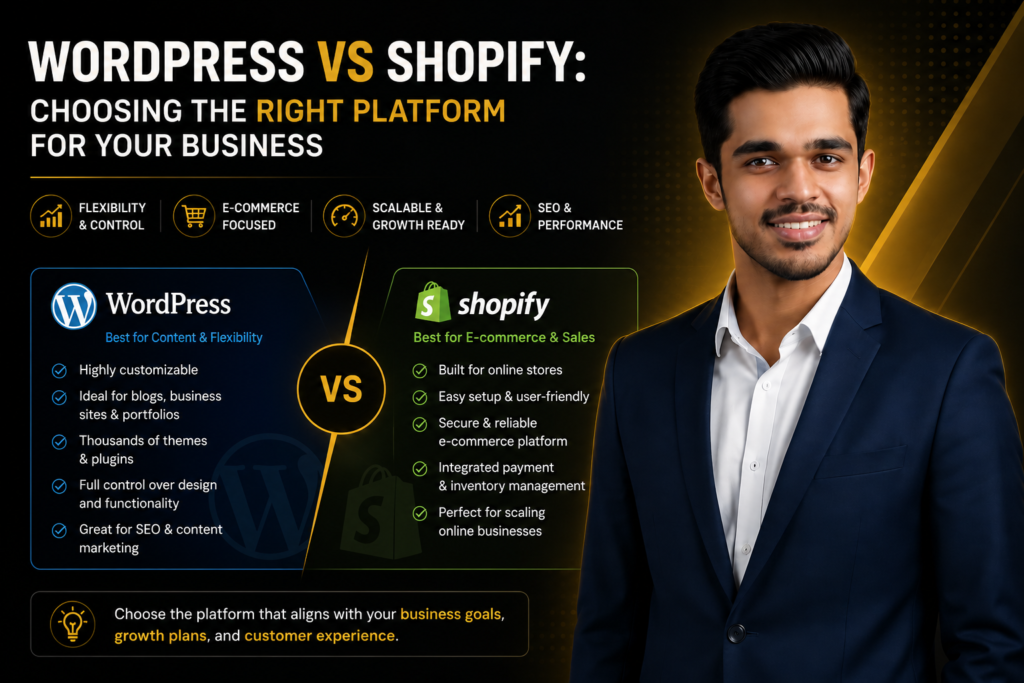
WordPress is known for its flexibility and customization capabilities. It powers millions of websites worldwide and supports everything from personal blogs to large business websites. With thousands of themes and plugins available, businesses can create highly customized experiences tailored to their goals.
One of WordPress’s biggest advantages is control. Website owners have full access to their site’s functionality, design, and hosting environment. This makes WordPress an excellent choice for businesses that require advanced customization, content marketing, and SEO flexibility.
Shopify, on the other hand, is specifically designed for eCommerce. It provides an all-in-one solution that simplifies online store management. Business owners can quickly launch stores without worrying about hosting, security, or complex technical configurations.
Shopify offers powerful eCommerce features, including inventory management, payment processing, product organization, and order tracking. These built-in tools make it easier for businesses to focus on selling products rather than managing technical infrastructure.
When it comes to SEO, both platforms can perform well when properly optimized. WordPress often provides greater SEO flexibility through plugins and advanced customization options, while Shopify offers user-friendly SEO settings suitable for most online stores.
The choice between WordPress and Shopify depends largely on business goals. If the primary objective is creating a content-driven website with maximum flexibility, WordPress is often the better option. If the focus is on selling products online with minimal technical complexity, Shopify provides a streamlined solution.
Both platforms have proven successful for businesses across various industries. Understanding your goals, budget, technical requirements, and growth plans will help determine which platform is the best fit for your project.
Ultimately, the right platform is the one that aligns with your business strategy and supports your long-term growth objectives. By choosing carefully, businesses can build a strong digital foundation that delivers value for years to come.